



A Cycling Journey Through Yufuin with Guide Mr. Takagai
- PICKUP
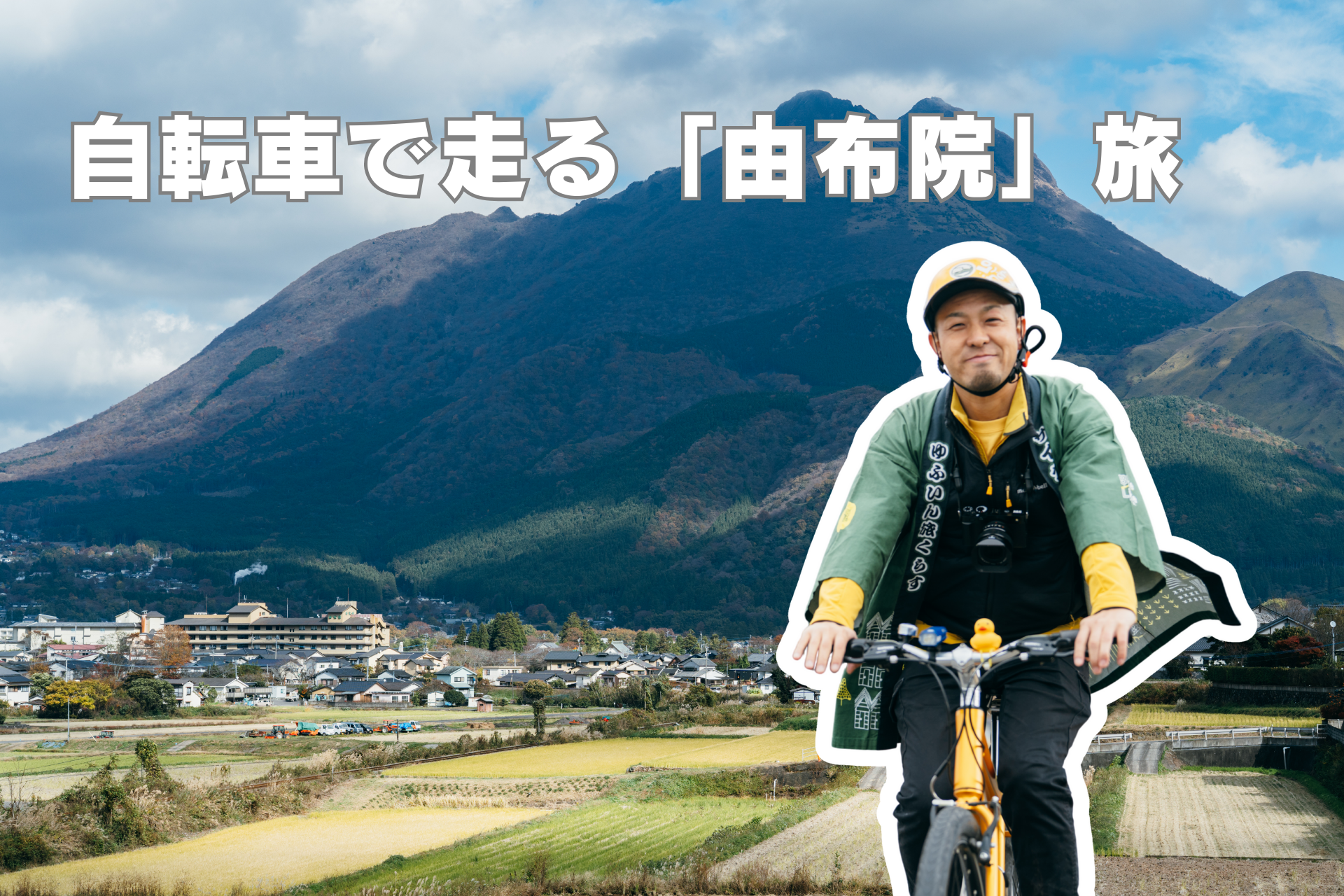
Introduction to the Yufuin Area
Cycling that lets you experience the “everyday life” of one of Japan’s top tourist destinations
Yufuin is bustling every day with visitors from Japan and abroad, offering an abundance of exciting attractions such as gourmet food and hot springs. However, step just one street away and you’ll find a quiet, peaceful daily life.
Mt. Yufu (Yufudake), whose majestic presence can be felt wherever you are in town, mountains that change their expressions with the seasons, and tranquil rural landscapes—surrounded by the nature unique to a basin, your mind naturally begins to unwind.
Introduction to the Guide (Local Guide) and the Route
Guide Introduction (Mr. Norifumi Takashina)
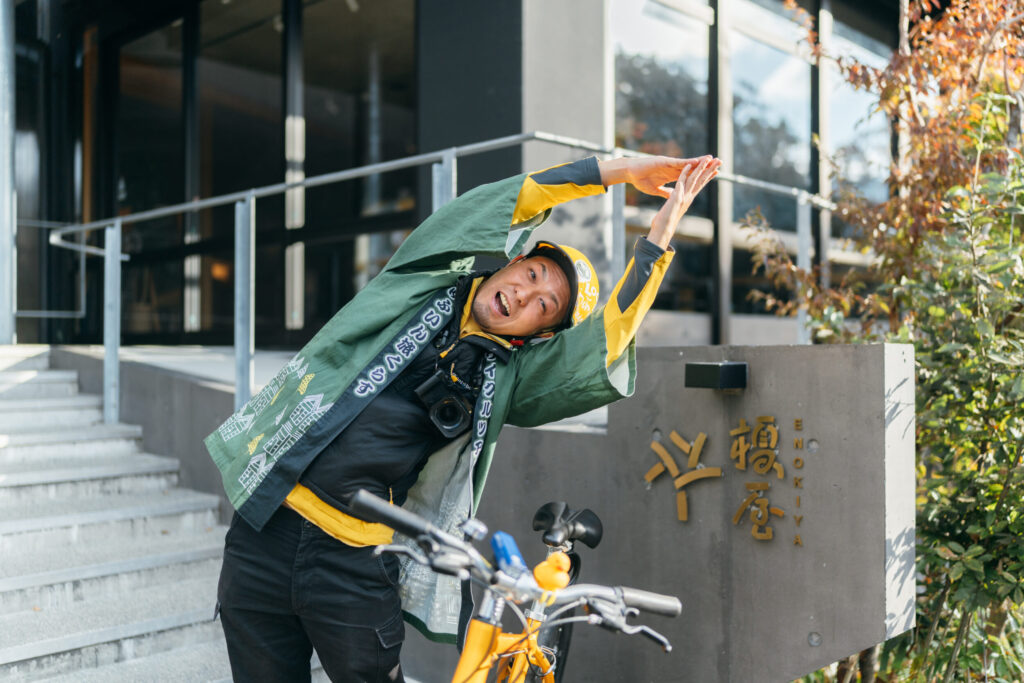
Mr. Norifumi Takashina, the guide. His dedication is evident in how everything—from his helmet and bicycle to his beloved personal bike—is unified in his signature color: yellow.
After working as a rickshaw puller and traveling seasonally to major tourist destinations across Japan such as Asakusa, Kyoto, Otaru, and Yufuin, he was captivated by the warmth of the people in Yufuin and decided to relocate there. He founded a dedicated concierge company, Tabikurasu Inc., which offers cycling tours and guided experiences. Focusing on “places I can truly recommend,” he shares the local charms of Yufuin from a variety of perspectives.
About This Route
Route this time: Manzoku Course
Duration: Approx. 3 hours 30 minutes
This course allows you to fully enjoy the many faces of Yufuin, from bustling, well-known tourist attractions to quiet spots perfect for a leisurely visit. Even places that are a bit too far to reach on foot are easily accessible by bicycle. Another highlight is the well-balanced schedule, with roughly equal time spent riding and walking, making the tour relaxed and unhurried. Locals are friendly and often strike up conversations, so be sure to enjoy interacting with them as well.
Stopover Spot
Tabikurasu Inc. ~Proposing custom-made Yufuin journeys that stay in your heart~

This base is located inside Enokiya Ryokan, where rental bicycles are also available.
Tel: 080-1753-6416
Address: 1086-2 Kawakami, Yufuin-cho, Yufu City, Oita Prefecture (inside Enokiya Ryokan)
URL: https://tabiclass.jp/
Instagram: @tabi_to_sake_to
With the concept of “Travel as if you live, and live as if you travel,” we offer tailor-made tours to suit your wishes, from famous attractions to hidden gems. Whether you want to enjoy gourmet food, explore off-the-beaten-path spots, or relax in hot springs, feel free to leave it all to us.
On our cycling tours, you can leisurely explore the town on rental mountain bikes while experiencing magnificent nature and local history. As your guide, I—Takashina—am also a transplant from Chiba, so I propose routes that I genuinely enjoy myself, drawing from both an outsider’s perspective and that of a local resident.
In recent years, many of our guests have been inbound travelers, but Yufuin is a place where Japanese visitors especially can experience the “good old original landscapes of Japan.” Exploring by bicycle leads to countless discoveries.
Lake Kinrinko ~A nationally rare lake fed by hot spring water!?~
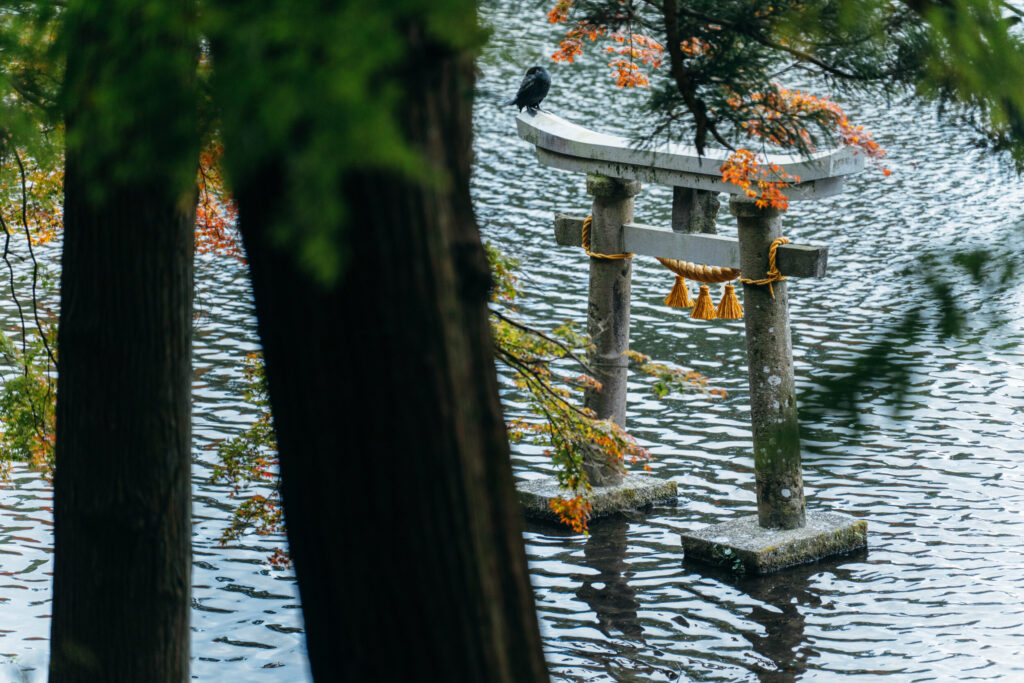
A fantastical shot taken from Tenso Shrine, a small shrine located on the shore of Lake Kinrinko.
Address: 1561-1 Kawakami, Yufuin-cho, Yufu City
Known as one of Yufuin’s most iconic landmarks, Lake Kinrinko attracts many visitors every day. It is a rare lake where hot spring water flows into natural springs, keeping the water temperature at around 20°C throughout the year. From autumn to winter, early mornings often bring a mystical scene as steam rises from the lake due to the temperature difference—be sure to wake up early to see it.
Another highlight is the torii gate standing in the lake. It was relocated from Bussan-ji Temple during the Meiji-era policy of separating Shinto and Buddhism, and its appearance, as if floating on the water, is truly beautiful.
If you circle toward the mountain side to approach the torii, you’ll find Tenso Shrine, associated with legends of a dragon god. According to locals, this side is said to be the “front” of Lake Kinrinko. From behind the shrine, you can walk right up near the torii floating on the lake—don’t miss the chance to capture a magical photo.
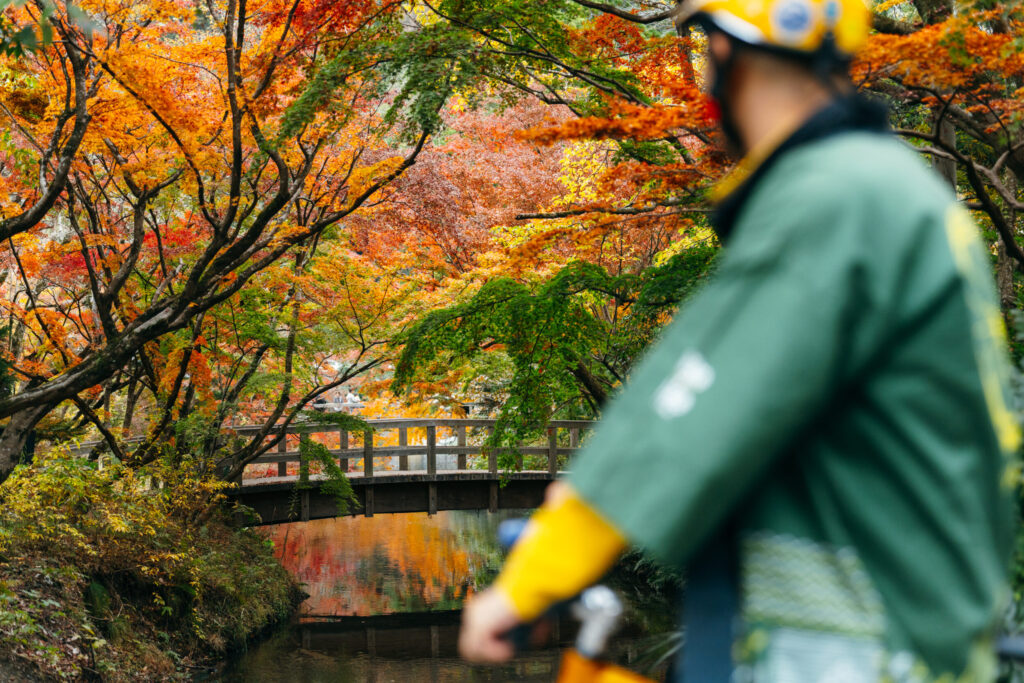
In autumn, the area around Lake Kinrinko is beautifully colored with red and yellow autumn leaves.
Bussan-ji Temple ~A temple deeply rooted in the region as a place of mountain worship~
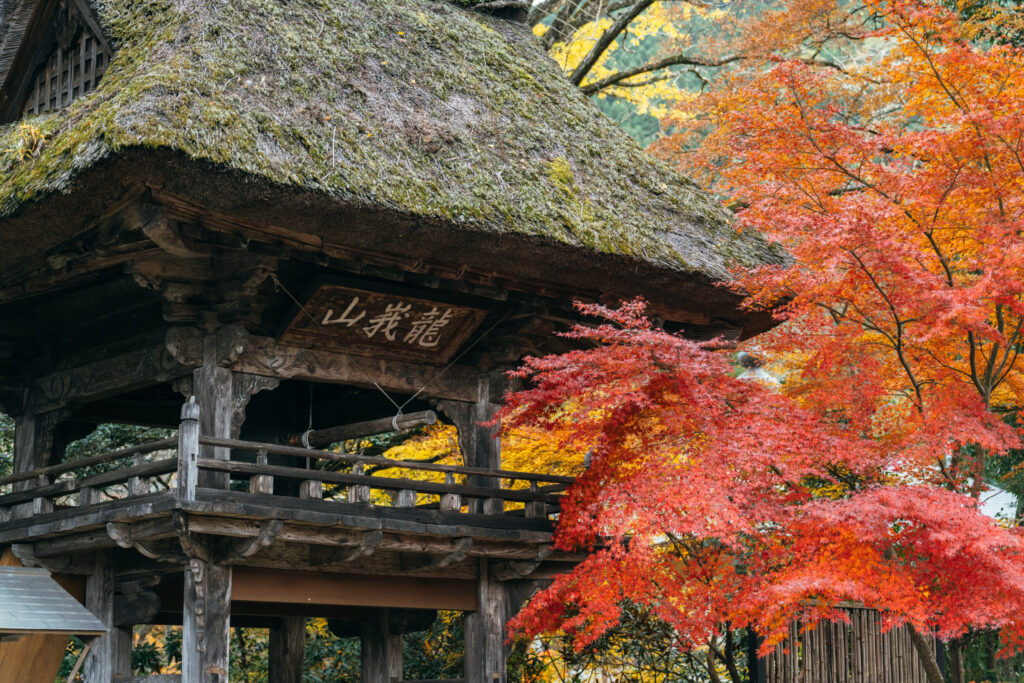
The thatched-roof temple gate, blending into the surrounding scenery yet radiating an overwhelming presence.
Tel: 0977-84-2714
Address: 1879 Kawakami, Yufuin-cho, Yufu City
Hours: 8:00–17:00
As you cycle along a narrow road lined with stone walls, Bussan-ji Temple comes into view. This historic temple was founded about 1,000 years ago on the slope of Mt. Yufu. It is said that after the principal statue fell during the Keicho Great Earthquake around 600 years ago, the temple was relocated to its present site.
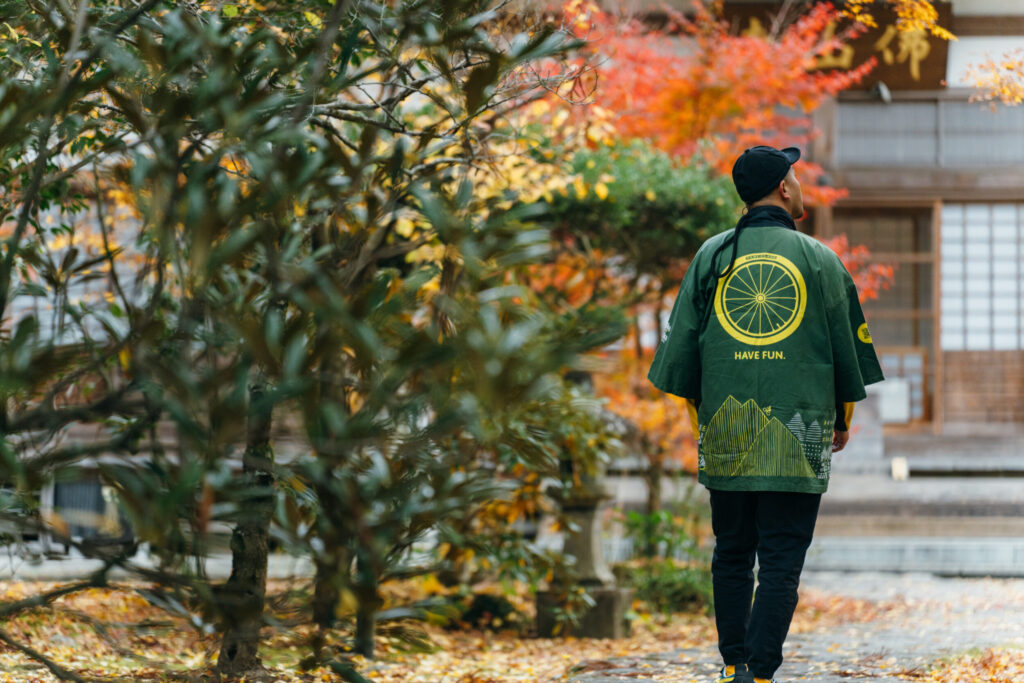
Its calm, refined atmosphere makes it a place perfectly suited for a mature and unhurried journey.。
The first thing to see is the temple gate, the oldest surviving wooden structure in Yufuin. Its thatched roof, in particular, symbolizes the quiet beauty of the satoyama landscape, standing dignified and intact for over 300 years.
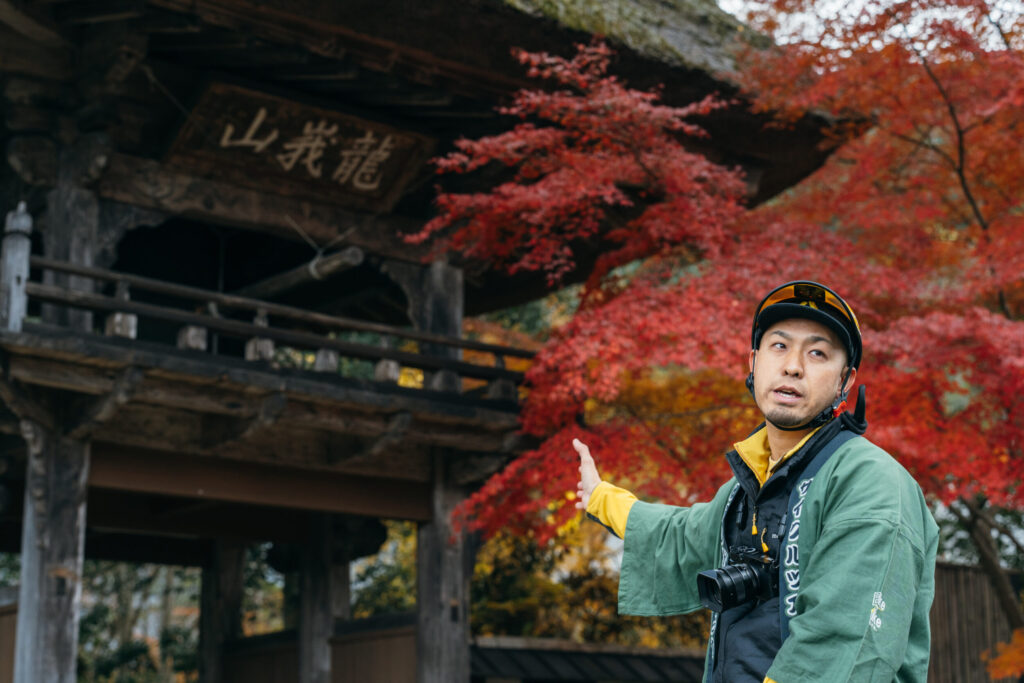
Having shared a long history with the local community, the temple remains deeply cherished by residents. The road in front of it is also part of the traditional route taken by horse-drawn carriages.
Within the grounds stands a pair of ginkgo trees over 300 years old—one male and one female—growing closely side by side. They are believed to bring blessings for marital harmony, fertility, and safe childbirth. In autumn, their leaves carpet the entire precinct in brilliant color.
The temple bell, repaired during wartime, is still rung every evening and is also beloved by locals as the bell rung on New Year’s Eve.
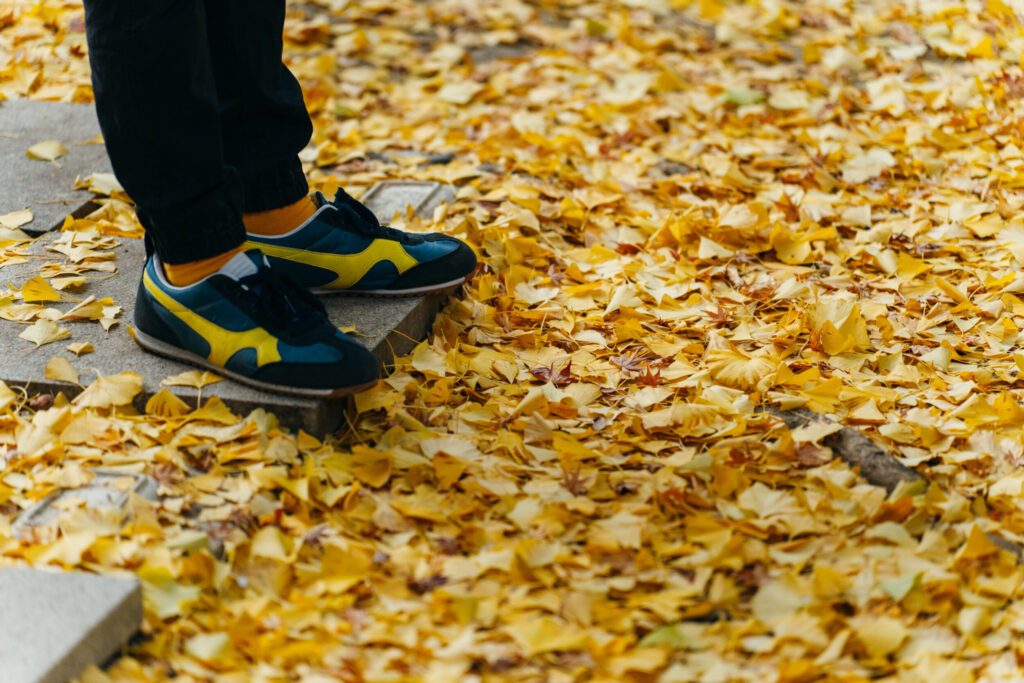
The ginkgo leaves spreading beneath your feet look just like a golden carpet.
Unagihime Shrine ~An ancient shrine protected by water deities and giant cedars~
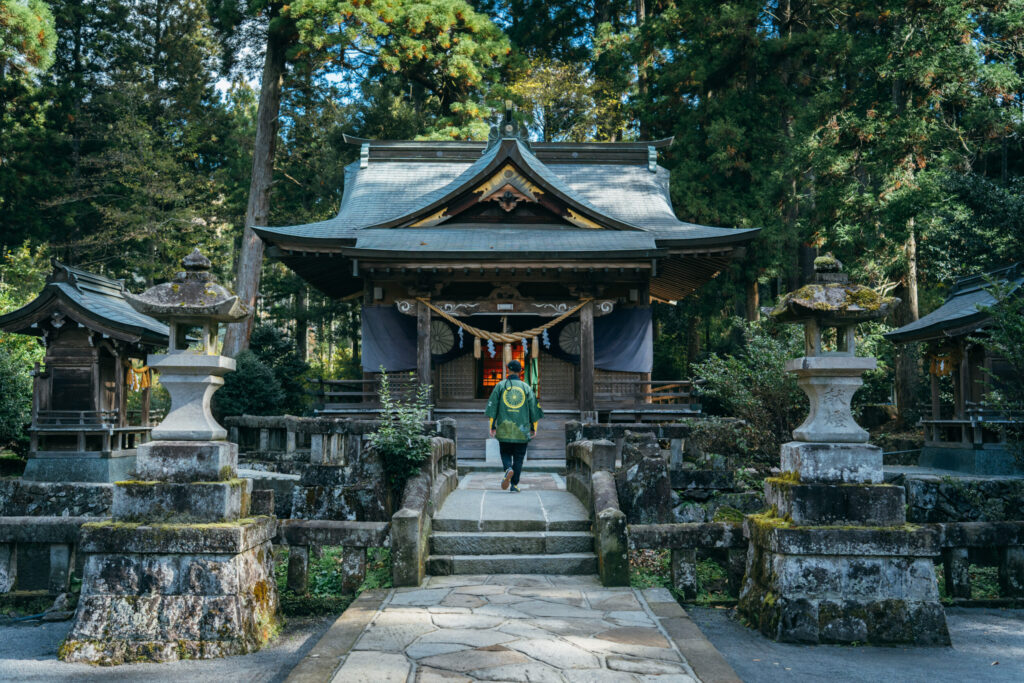
A space filled with refreshing air and a solemn atmosphere. The worship hall is surrounded by a moat.
Tel: 0977-84-3200
Address: 2200 Kawakami, Yufuin-cho, Yufu City, Oita Prefecture
Unagihime Shrine, worshipped as a deity of agriculture and water, enshrines six deities, including Kunitokotachi-no-Mikoto. One theory behind the shrine’s name suggests that “unagu,” a local dialect word for the magatama-style necklaces worn by high-ranking women who served the shrine, later evolved into “unagi.” Another theory says the name derives from worshipping eels as spirits of swamps and marshes.
The shrine grounds were once densely covered with sacred trees, but Typhoon No. 19 in 1991 caused 144 giant cedars to fall. Among them, the largest remaining stumps are preserved and enshrined at the Otoshisha. Some of these cedars are believed to be over 600 years old, with a circumference of an astonishing nine meters—so large that it takes eight adults stretching out their arms to encircle them. Be sure to touch them and feel their powerful energy.
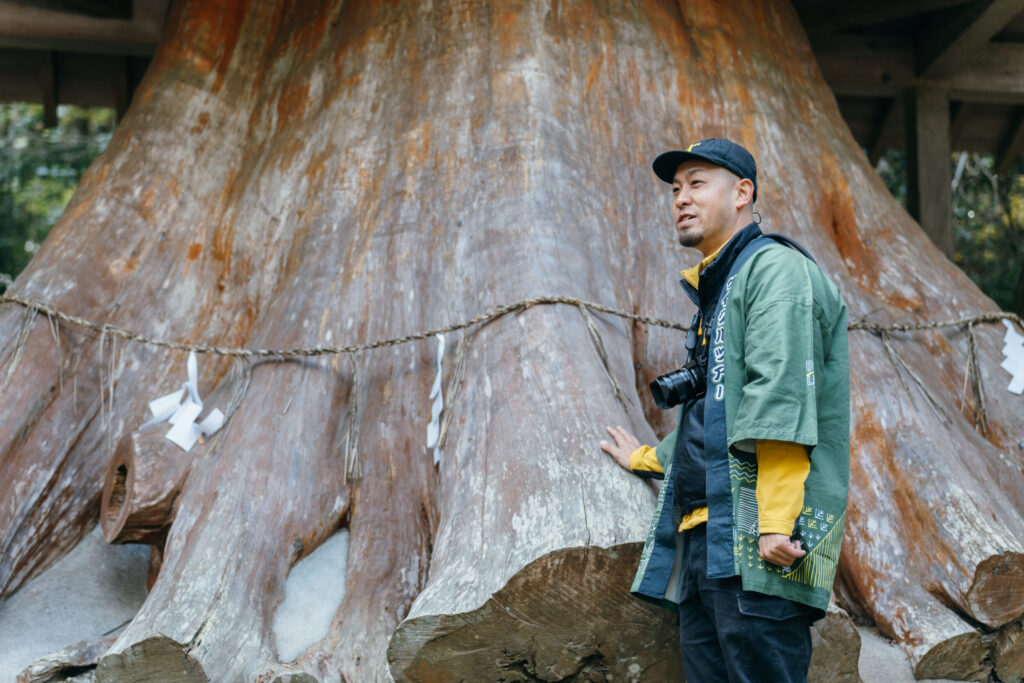
You can touch the sacred tree stumps enshrined at Otoshisha.
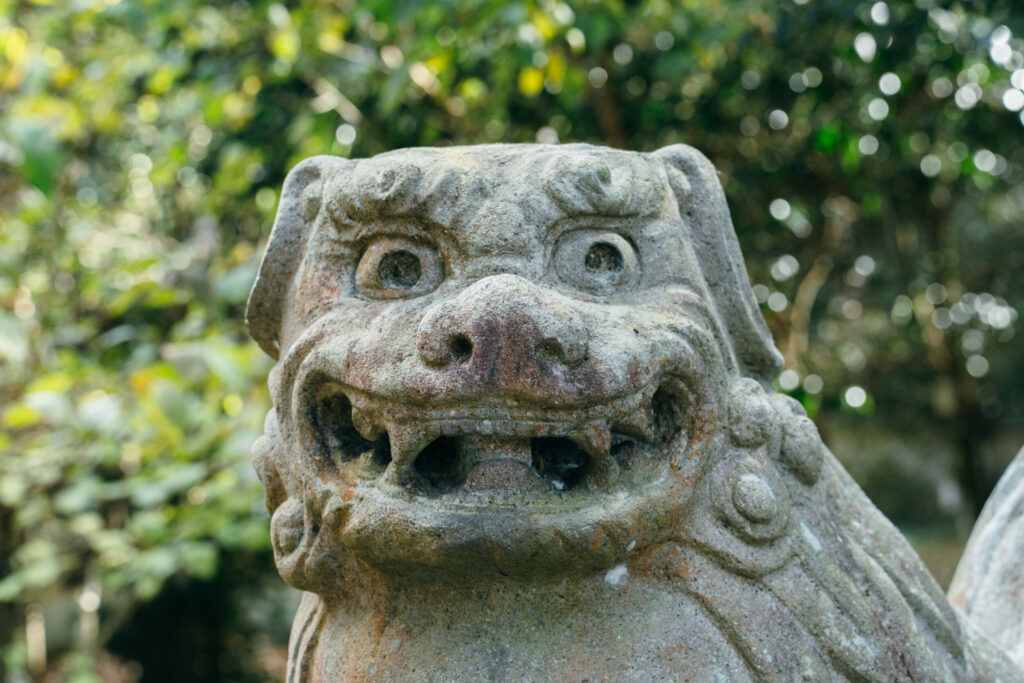
At the entrance, you’ll be greeted by komainu guardian dogs that look as if they are smiling.
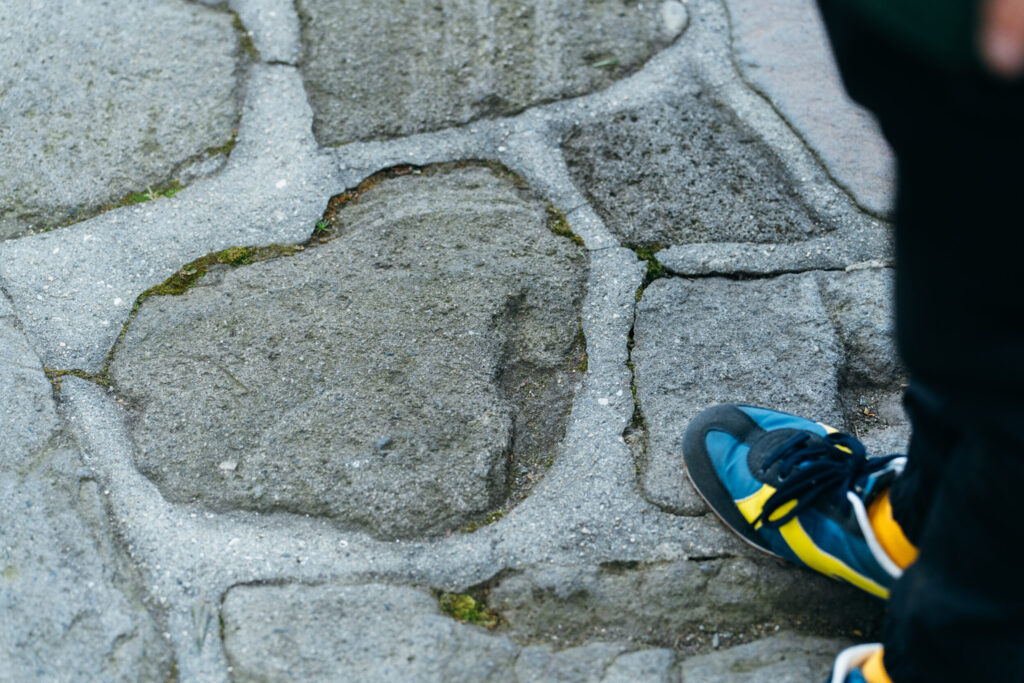
As you walk through the torii gate toward the main shrine, try to find the hidden “heart” somewhere among the stone paving.
Ogosha Shrine ~A hidden power spot where the crisp air straightens your posture~
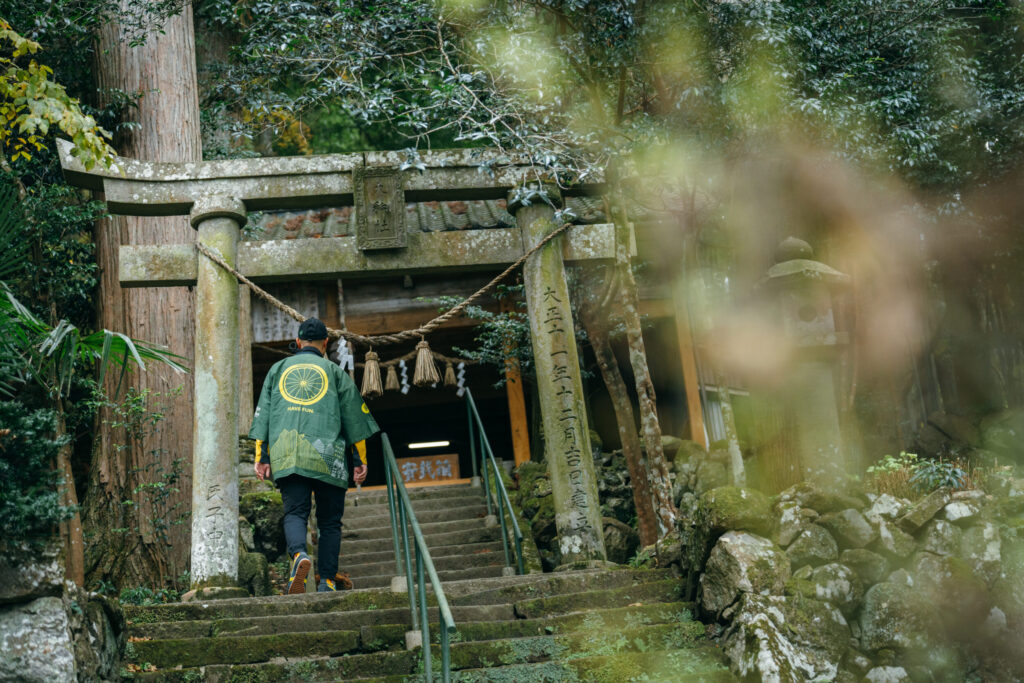
A quiet power spot where the dignified atmosphere naturally makes you stand taller.
Address: 746-19 Kawaminami, Yufuin-cho, Yufu City, Oita Prefecture
Ride your bicycle briskly south from the town center. At first glance, the entrance is easy to miss, and beyond it lies a narrow, steep slope. Leave your bicycle and continue on foot, and soon dense trees cast deep shadows as a shrine building with a solemn presence comes into view.
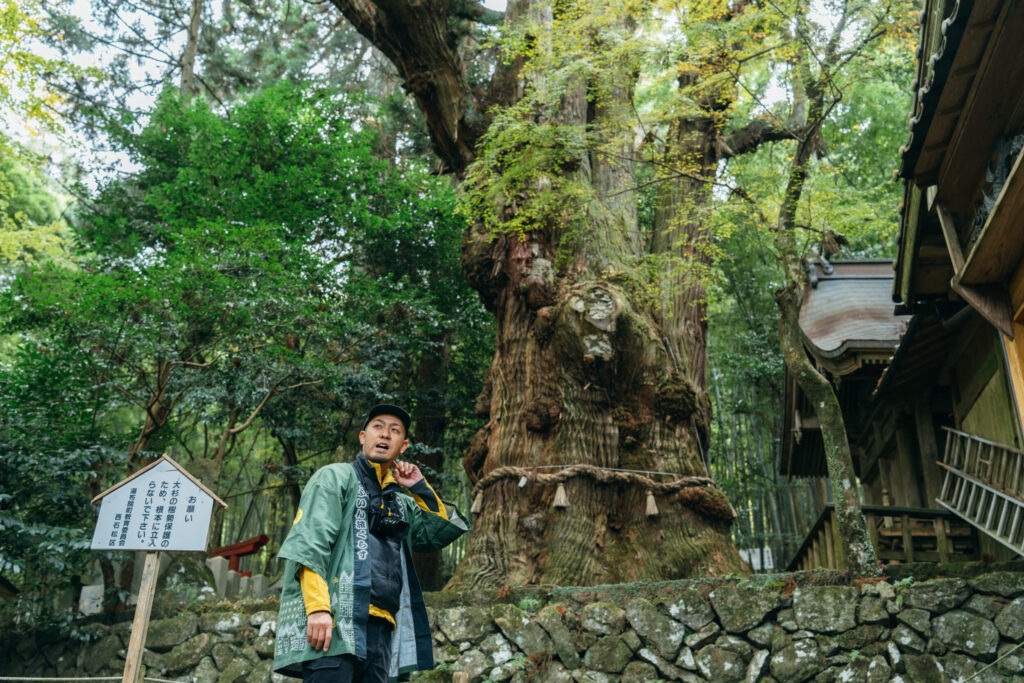
It is also a rare sight to see different kinds of trees—cedar, bamboo, pine, and more—growing together.
The sacred giant cedar that stands out most has been designated a National Natural Monument and is over 1,000 years old. Walking around to the back, you’ll find a large hollow inside, completely blackened. This is said to be the result of an arson fire that burned for an astonishing three years. The smoke treatment is believed to have helped protect the tree from insects, allowing it to survive for more than a millennium. For conservation reasons, touching it is no longer permitted, but you can still draw power from its overwhelming presence.
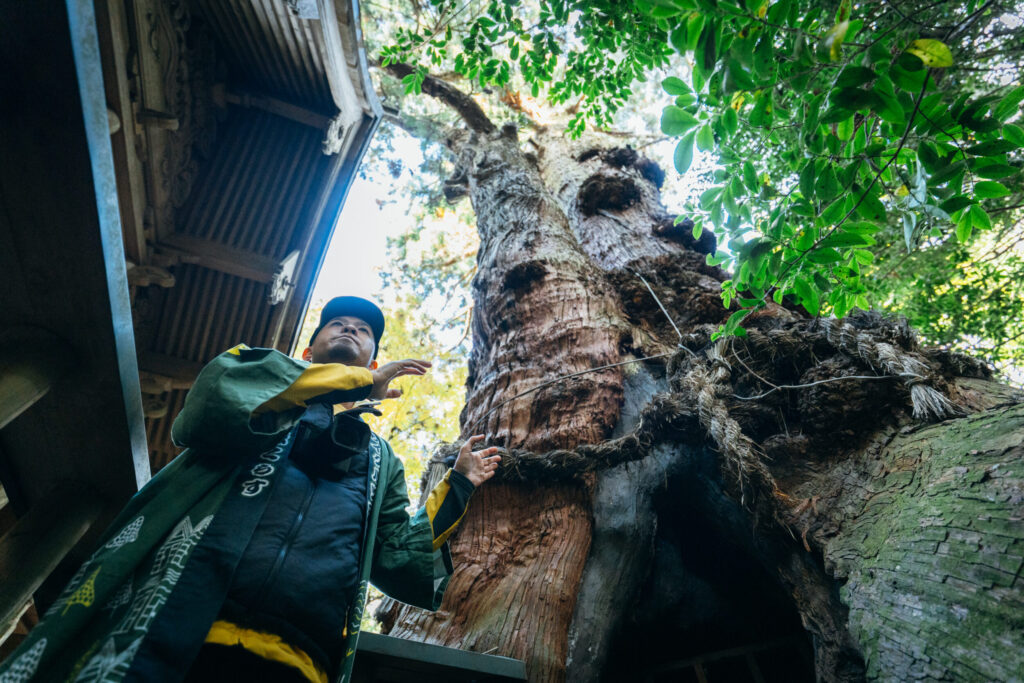
The sacred tree stands 38 meters tall, and the hollow inside is about the size of three tatami mats.
Yamasaki Overpass ~A photo spot where you can capture an iconic view of Yufuin~
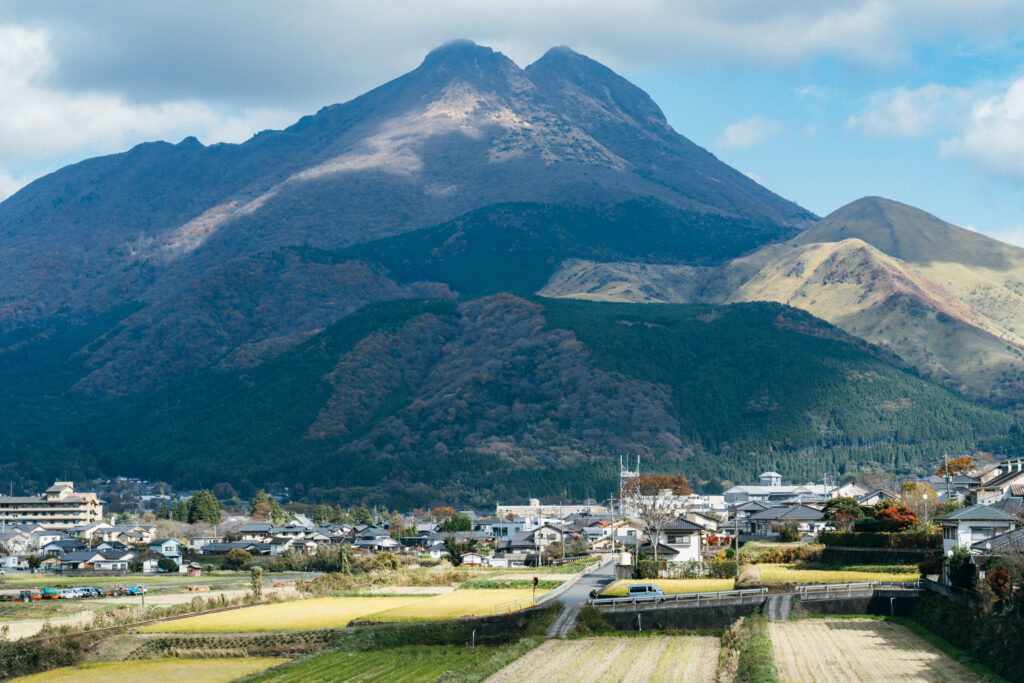
Yufuin Town spreads out at the foot of Mt. Yufu. Railway tracks run beautifully through the peaceful countryside, making it instantly clear that this is a basin.
Address: Kawaminami, Yufuin-cho, Yufu City, Oita Prefecture
From the top of Yamasaki Overpass, located near Minami-Yufu Station, you can enjoy a view that truly says, “This is Yufuin!” Below the bridge runs the Kyūdai Main Line. Originally, this railway was planned to connect Hita directly to Oita, but access to the Yufuin Basin was extremely poor at the time. Two entrepreneurs—Kanpachi Aso from Kokonoe Town and Ichiroku Eto from Yufuin—worked tirelessly to reroute the line through the basin, resulting in the route we see today.
Looking at the tracks, you can clearly see how they detour from the Yuhira area, curve through the basin, and extend toward Hita City. Ichiroku Eto is said to have donated his land in present-day Yufuin Town to the Japanese National Railways free of charge. Because of this, the curve is known as the “Ichiroku Curve.” The opening of this railway laid the foundation for Yufuin’s development as a tourist destination.

This is one of many photo spots scattered throughout Yufu City. Capture your best shot here.
The line is also used by popular sightseeing trains such as Yufuin no Mori, Aru Ressha (A Certain Train), Nanatsuboshi, and Kanpachi & Ichiroku, named after the two men who made the railway possible.
Jo-bashi Bridge ~A beautiful scene encountered on a lively tourist street~
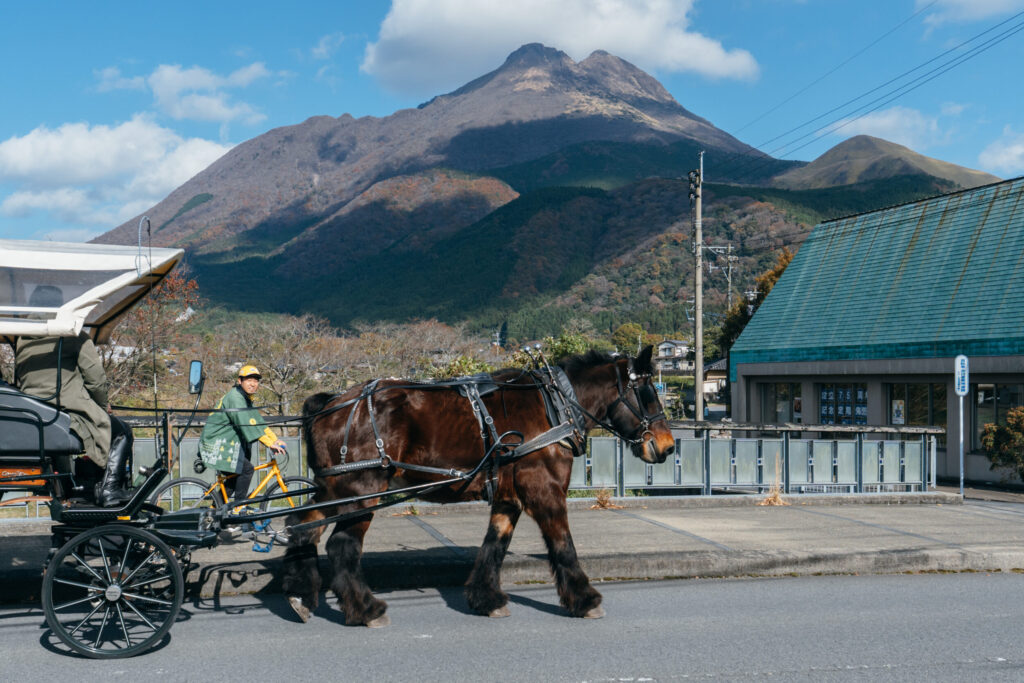
We happened to encounter a horse-drawn carriage (tsuji-basha) on the bridge. This, too, is a seasonal sight unique to Yufuin.
Address: Kawakami, Yufuin-cho, Yufu City, Oita Prefecture
Located near Yufuin Station, Jo-bashi Bridge spans a gently flowing river that comes from Lake Kinrin. Rising before you is Mt. Yufu, and you can often see steam drifting along its mid-slope—an iconic scene that perfectly captures the charm of a hot spring town. In spring, cherry blossoms bloom along the riverside promenade, creating a picturesque landscape of river, mountain, and sakura—an image that feels quintessentially Japanese.
The bridge railing features small recesses so visitors can comfortably lean their elbows while enjoying the view. Even such thoughtful details reflect the spirit of hospitality found in this popular tourist destination.
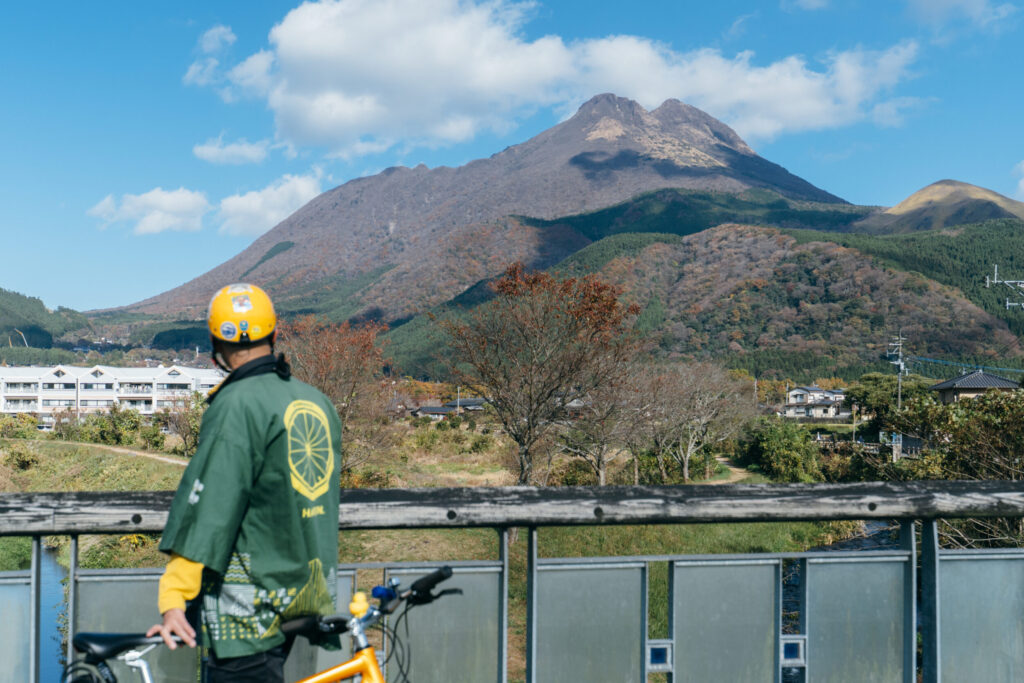
The sandbank visible from the bridge becomes the stage for the climax of the Kōjō-sai Festival, held every year on August 15. This traditional festival prays for a bountiful harvest. A procession carrying banners and torches parades through the town, collecting straw dolls known as “Jitsumori-don” that have been displayed throughout the area. The festival concludes with the dolls being burned together as a large torch on a raised platform (yagura).
After the Guided Tour
This route allowed us to discover both the lively and the tranquil sides of Yufuin, each with its own charm. Thanks in part to the warm personality of Mr. Takashina, who actively shares local information on a daily basis, many local residents stopped to chat with us along the way. The heartfelt interactions made this journey one that truly left us thinking, “I want to come back again.”
A Message from Guide Takashina
I offer tours that make you feel like you’ve become part of the community before you even realize it—despite having come as a visitor. Why not enjoy a rich, local, and homey “high-density Yufuin experience” while connecting with nature and culture?
Contact Information
Website: https://tabiclass.jp
Instagram: @tabi_to_sake_to
Updates on Instagram
Scenes from the Yufuin tours are also shared through Instagram short videos.
Be sure to check out Instagram to experience the tour’s immersive atmosphere!